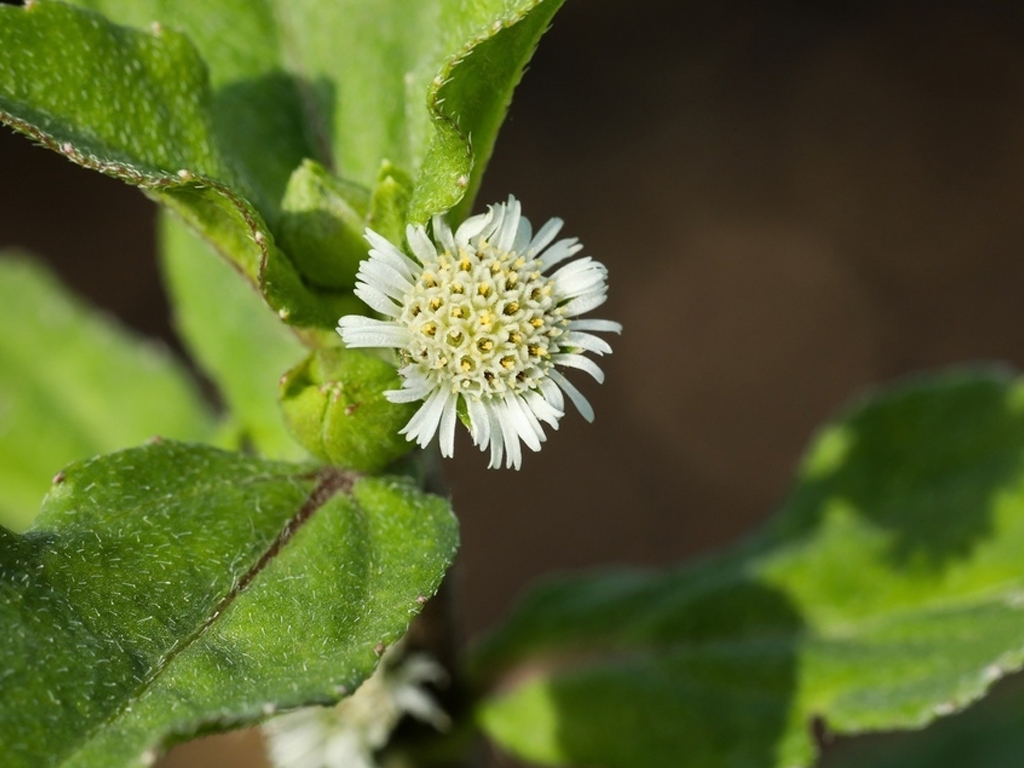
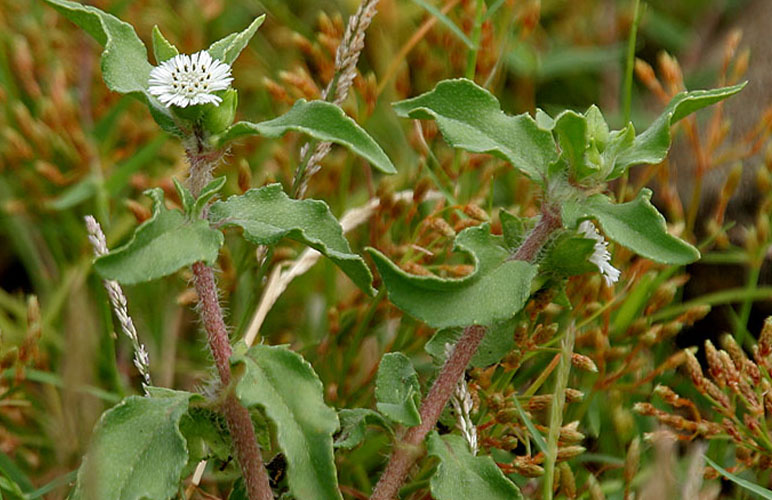
It is an erect, perennial, tall subshrub or shrub. The stem is quadrangular, branched, woody in lower parts, younger parts covered in hair while older parts are smooth.
The leaves are simple, opposite, ovate to elliptic in shape with an acute tip, wedge-shaped base and a toothed margin. The leaf contains fragrant essential oil which can be smelled on crushing it. The flowers are arranged on hairy verticillaster inflorescence, wherein flowers are arranged in sessile cymes that are arranged in whorls. Flowers are surrounded by green bracts. The flowers are small, greenish yellow or greenish white in color. The petals are fused and bi-lipped. Stamens are white and anthers are yellow in color. The fruits are small, smooth four nutlets that are almost spherical.
The plant is highly medicinal. It is considered a stimulant, diuretic, digestive and demulcent. It is used to treat cough, cold and congestion in combination with expectorant.
The seeds are used to treat dysentery, headaches and urinary disorders. It is used as a general tonic. It has anti-cancerous properties. It improves heart function, reduces bad cholesterol and increases blood circulation. It has wound healing activity. It promotes oral hygiene. It is a mosquito and insect repellent.