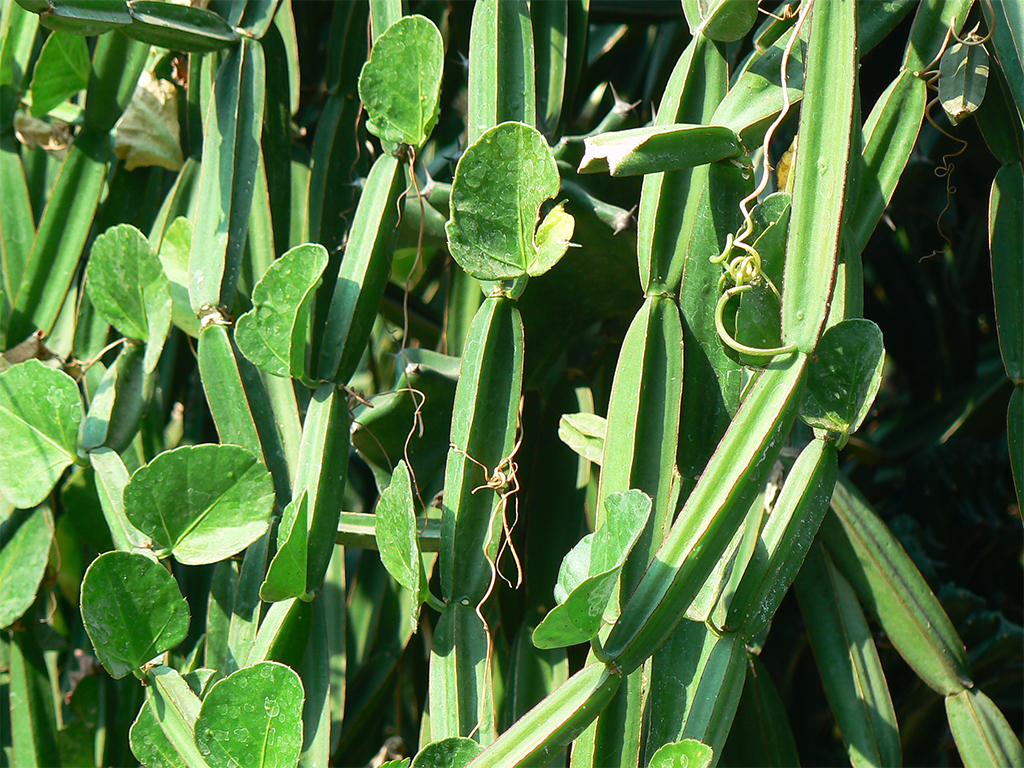
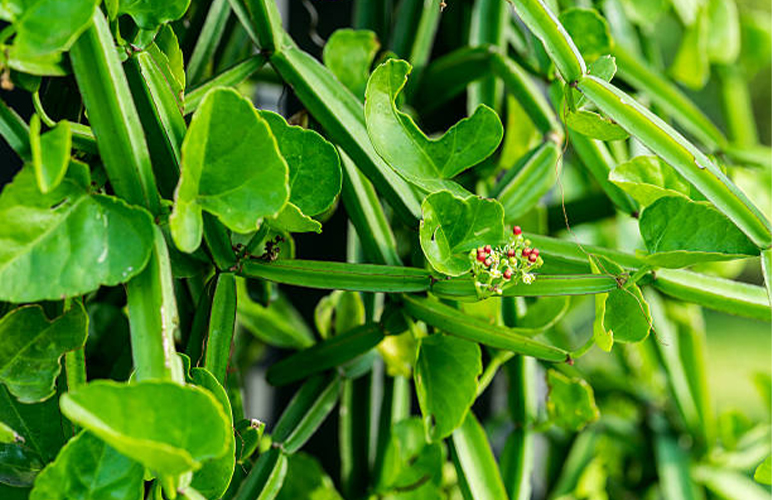
➢ It is a climbing herb. ➢ The stem is thick, fleshy, succulent, deep green in color, quadrangular and ribbed. It is constricted at nodes with long simple slender tendrils and is winged at the angles of the ribs. ➢ The leaves are membranous, broadly ovate, trilobed having a toothed margin and with a tendril opposite each leaf. The plant is almost leafless when old. ➢ The flowers are arranged in umbellate cyme inflorescence. The flowers are small, white or pink in color with four petals that are hooded at the apex. ➢ The fruit is a red, smooth, succulent, globose berry and is one seeded.
✓ The plant is grown in gardens and parks as hedge. ✓ The plant is used in treating bone fractures, swellings and injured ligaments. ✓ It is called ‘Asthisamhara’ meaning that which mends broken bones. ✓ The juice extracted from the stem is used in cases of scurvy. ✓ It is considered a tonic and analgesic. ✓ It helps to reduce swelling and relieve pain. ✓ The juice of twigs helps with epistaxis (nose bleeding). ✓ It is used to treat osteoporosis. ✓ Stem is used in treatment of piles. ✓ It has antibacterial and antifungal properties. ✓ The plant is also said to have antioxidant and anthelminthic properties.