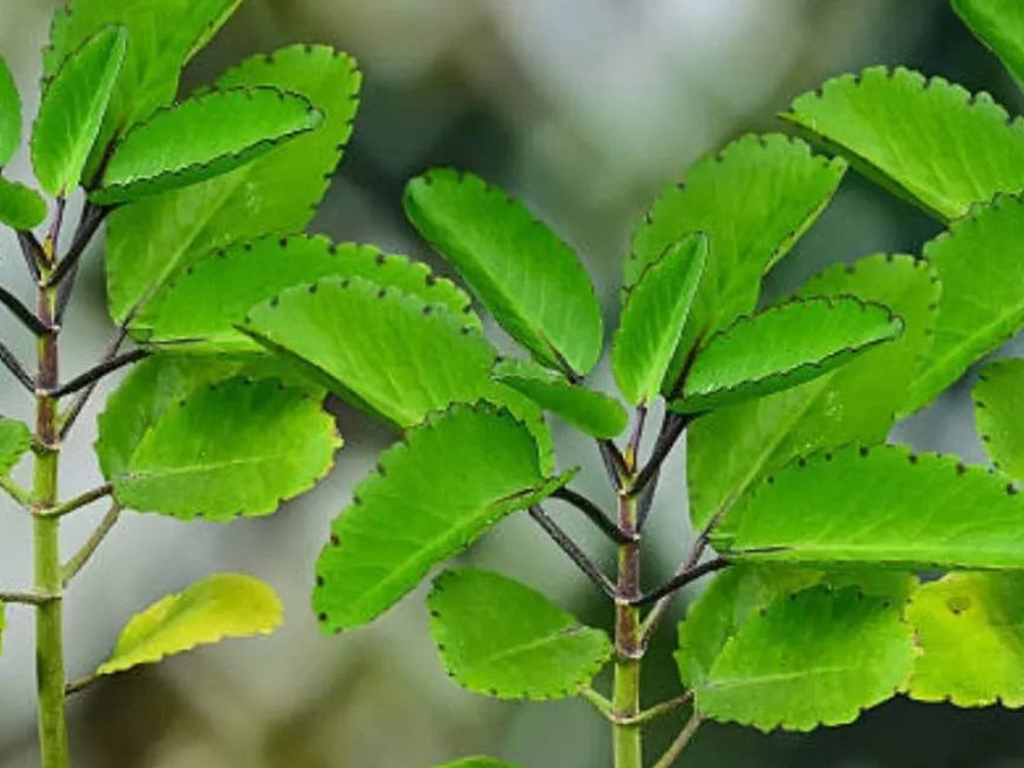
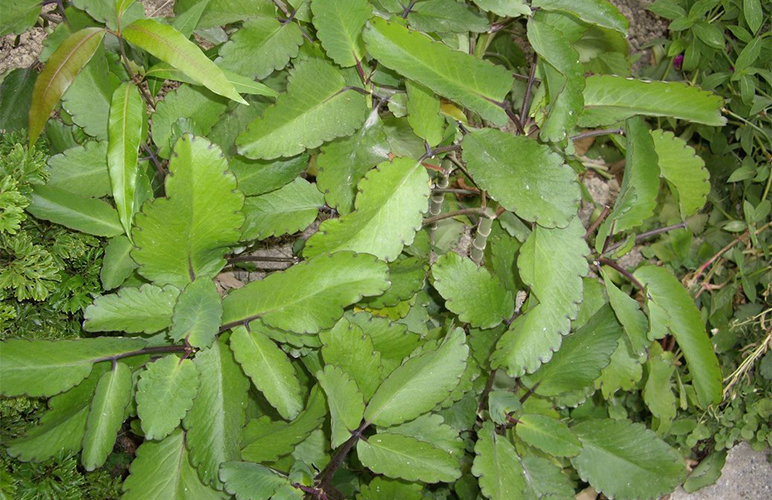
➢ It is a succulent herb. ➢ The leaves are simple, opposite with each pair at right angle to the pair above and below it. They are ovate, thick, succulent and having a rounded teethed margin which is usually brown in color. A single leaf can give rise to many plantlets, hence the name ‘Panphuti’. ➢ The flowers are arranged in much branched, terminal inflorescences. The flowers are attractive, bell-shaped, drooping, with opposite stout branches. The sepals are papery and petals reddish to purple in color. ➢ The fruit is of follicle type of pod and in the persistent sepals and petals, containing many seeds.
BOTANICAL NAME
Kalanchoe pinnata (Lam.) Pers
FAMILY
Crassulaceae
FLOWERING
January – March
FRUITING
January – March
PROPAGATION
It can be propagated by seeds and leaves or stem cuttings
PLANT PART USED
Leaves
COMMON NAMES:
Air Plant, Miracle Leaf, Katakataka, Donkey Ears, Life Plant, Leaf of Life, Resurrection Plant, Canterbury Bells, Cathedral Bells, Mexican Love Plant, Floppers; Hindi: Amar poi, Panphuti; Bengali: Kop pata; Malayalam: Elamarunna; Manipuri: Manahidak; Tamil: Runakkalli
USES
✓ The plant is ornamental and grown outdoors in parks, gardens as well as indoors at homes, offices. ✓ It is a caterpillar food plant. ✓ The leaves are used as a spice and are edible. ✓ It is used to treat kidney stones. ✓ The leaves are externally used to treat skin inflammation, sores, scars, discoloration, insect bites and for wounds as antiseptic. ✓ Leaves are ingested to treat dysentery, diarrhea, bronchitis, pneumonia, cholera and jaundice. ✓ Leaf juice is used for earache and ophthalmia. ✓ It is used as astringent, antiseptic, and counterirritant against poisonous insect bites. ✓ It enhances skin’s tone and elasticity.